Weekly
Workshops
Within this website I will be recapping
and reviewing the topics covered in the weekly workshops
as part of the 'Digital Practices' module.

This is my personalised website, created as part of the Digital Practices Module.
Within this website I will be recapping
and reviewing the topics covered in the weekly workshops
as part of the 'Digital Practices' module.

In the first week of the Digital Media worksops, we started looking into html and css coding, and how these can be used in website coding.
During this workshop we found out how to use software such as 'Brackets' and 'Filezilla' to write out different commands and produce various different web-page layouts.
One of the main challenges of the workshop was understanding the new software applications and the initial set up of the websites. Learning the 'language' of coding can also take a while to understand initially, however quickly makes sense once you understand the basics.
In the second week of the workshops, we looked into the process of "Webscraping", which is the process of using coding to automatically analyse data held within online web pages and platforms.
During this workshop we learned about the process of webscraping and put our learning into practice by harvesting data such as show titles and categories from online streaming services such as BBC iPlayer.
This workshop proved more challenging as it involved a greater understanding of the html, and required us to identify and understand the role of specific areas of code, in order to create data markers.
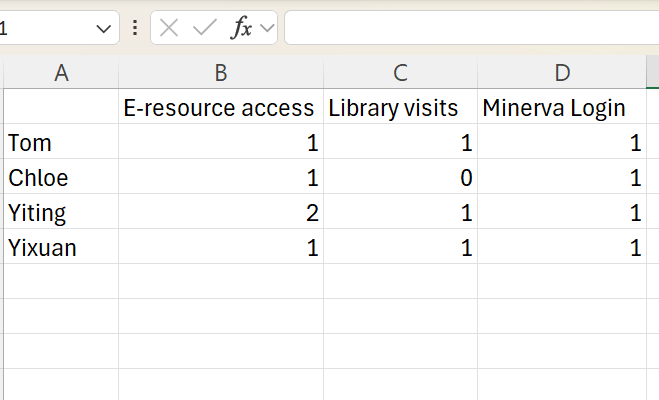
In the third week of our workshops we began to look into creating our own data set. We worked in groups to select a scenario and narrow down what data we wanted to collect. We then had to discuss the ethical implications of collecting our data, define how we would collect it, and identify what biases or assumptions might be found in our data. We then worked to indentify 3 or 4 variables tp measure and create a dataset in the form of a table that we could later analyse.
This workshop allowed us to consider the ways in which the university gathers our 'engagement', as well how that information can be used, and how we feel that refelcts our true engagement.
This workshop presented challenges in terms of identifying the data we wanted to collect but also in terms of understanding how the data we investigate will help us learn something about our selected samples.
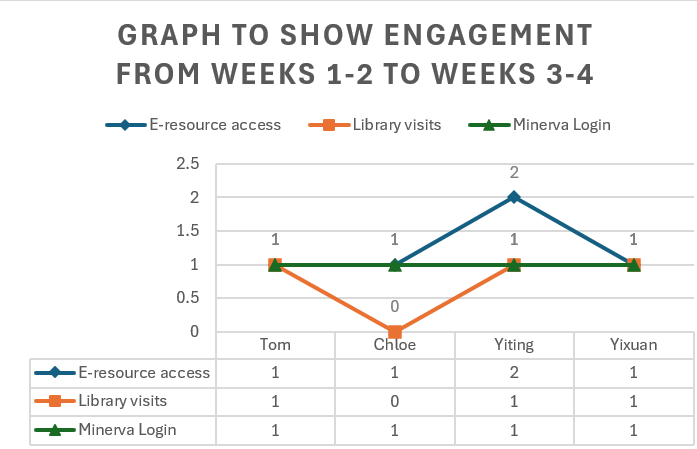
For this weeks workshop, we worked to create data visualisations from our datasets from the previous workshop.
Data visualisations can help us understand data in a way that isn't instantly recognisable through the data sets alone. For example, you can see in the visualisation of my data below, that the outliers in the data are instantly recongisable
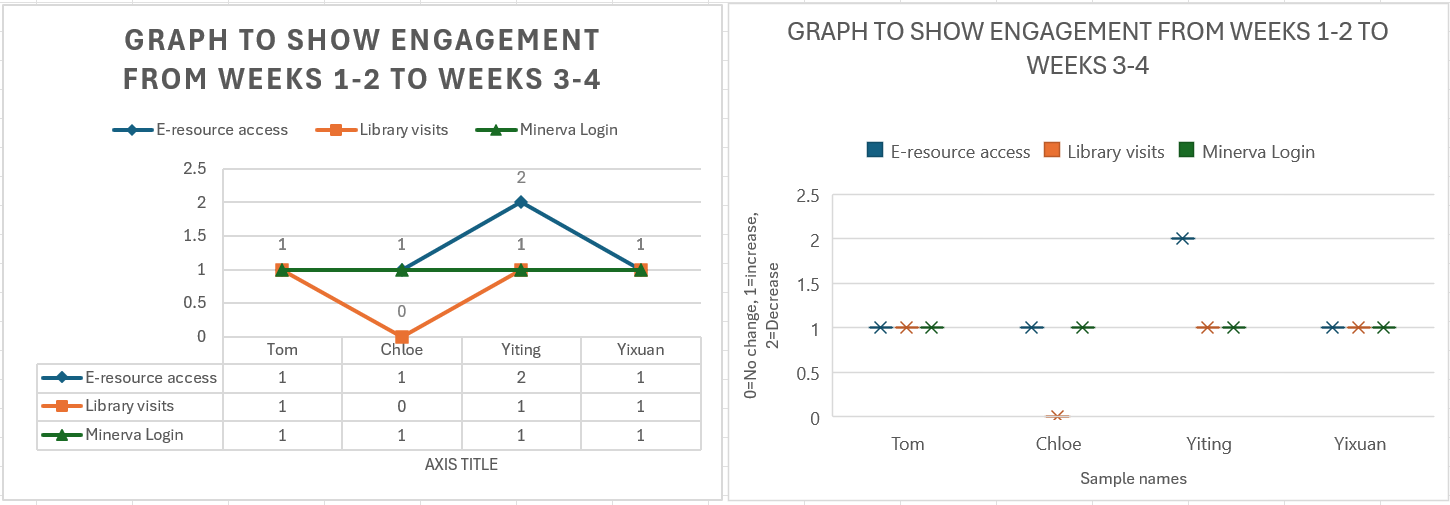
The challenges for this week were getting to grips with software such as excel, and using it to find appropriate ways to effectively represent our data.

.
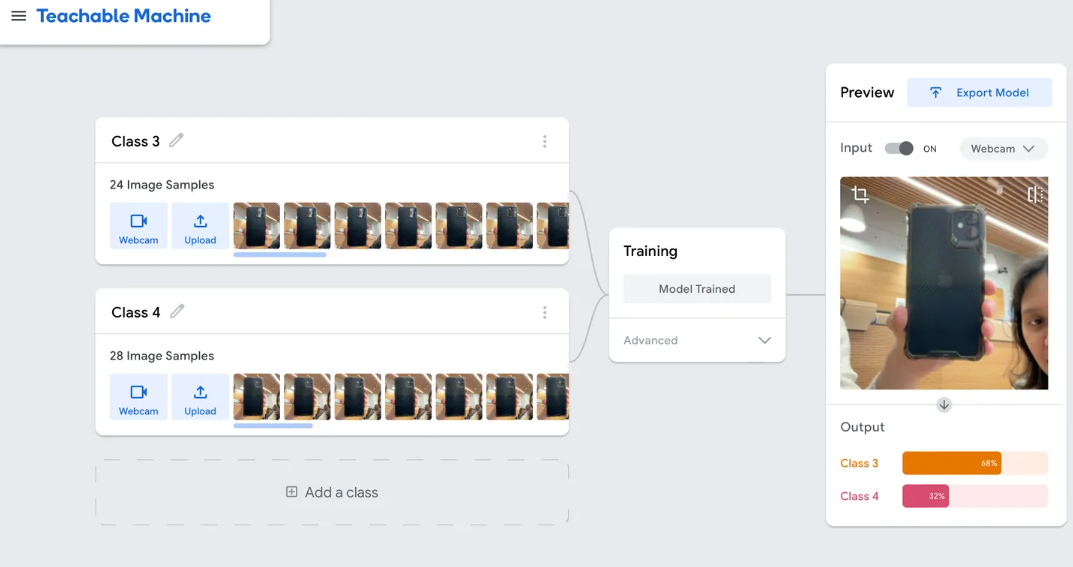
For this workshop we investigated the use of 'Teachable Machine to explore machine learning.
For this experiment we worked in groups to attempt to train the model to identify two different objects. We tested the model and then expanded the model by adding more images to the data, in an attempt to increase the accuracy.
After we had trained the model to identify objects more accurately, we began to try and test the limits of the software by attempting to trick it confusing similar objects.
This workshop taught us about the limitations of machine learning and demonstrated how facial recognition software can be tricked and fooled by factors such as changing backgrounds or similar colors on screen.
For this weeks workshop, we investigated the ways in which our data is gathered and used online, specifically on social media.
We started by investigating the ‘input’, specifically the ways in which our data is gathered online, focussing on social media sites such as Facebook to examine their data information pages. It was surprising to uncover just how much of the data we generated online was categorised and available for view. From stories we viewed weeks ago, to camera filters we only used once, the amount of data we had created on these sites was very surprising.
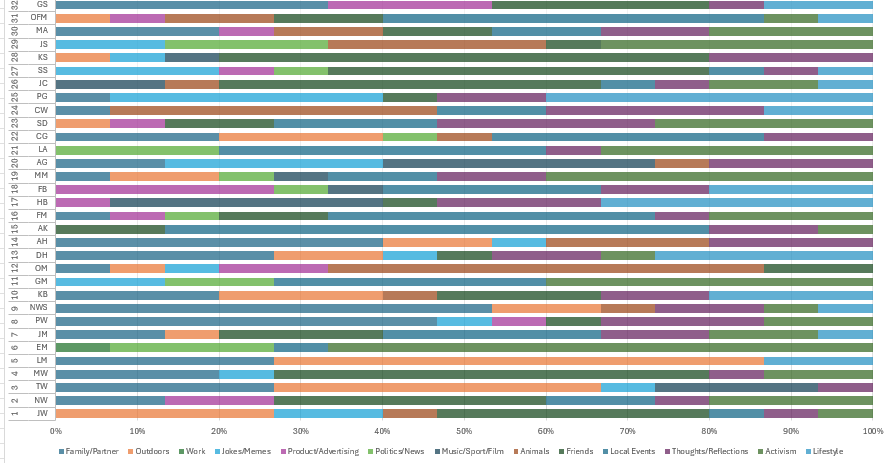
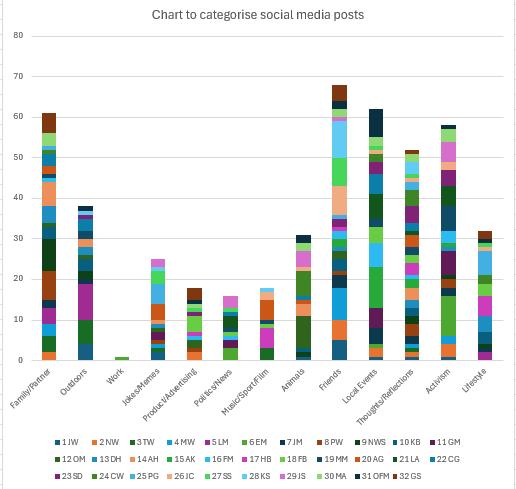
Following that we began the ‘output’ section of the workshop. Within this section we examined our google ad profile, where we could see the categories that had become associated with our google account. To my surprise I had been allocated categories such as ‘sportswear’ and ‘restaurants’ which came as a complete surprise as I had no recollection of ever searching for these online. The final part of the workshop was the ‘process’ stage. For this experiment we employed ‘Sumpter’s Matrix’ to manually go through and scrape information from our friends social media pages, similar to the process of the algorithm. We took 32 friends and analysed 15 of their most recent posts and placed each of them within one of the 13 categories that Sumpter had created, such as ‘lifestyle’, ‘outdoors’, or ‘animals’.
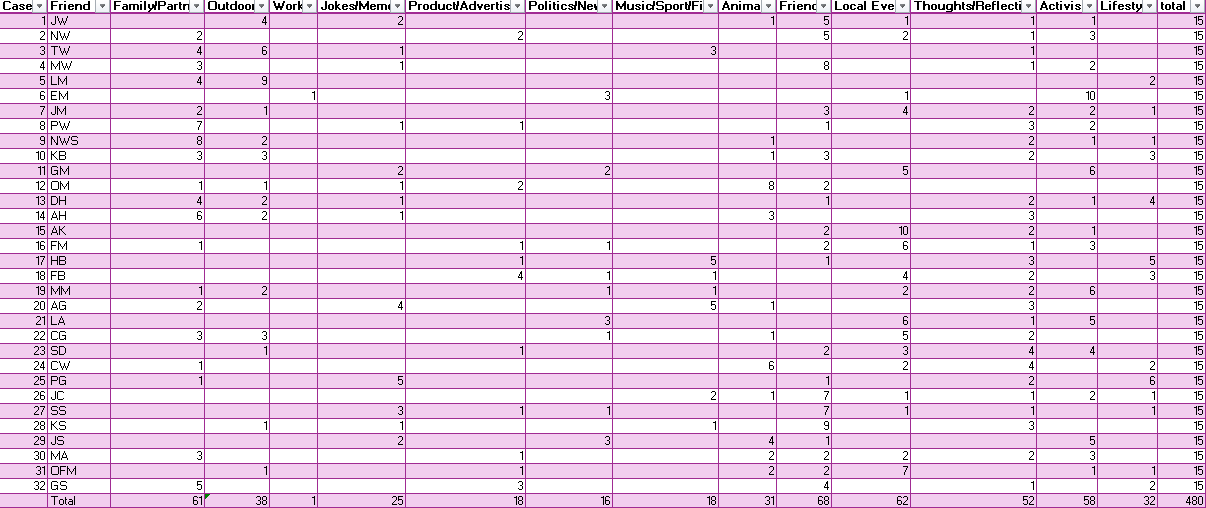
The main challenges this week were during the ‘process’ task, as placing the posts of others in a limited number of categories proved to be more difficult than expected. For example, there were some posts that did not clearly fit within one of the 13 categories, whereas there were other posts that could reasonable fit into 2 or 3 of the categories all at once. Furthermore, it felt as though the process removed all context and personality form the post and the individual, whicih at times was difficult, but ultimately all part of learning to think in the same way of the algorithm
These challenges however, did help us to understand the types of processes that are involved in creating our online ‘algorithmic identity’, and enabled us to develop a deeper understanding of how our identities might be somewhat inaccurately created, as, if we struggled to categorise accurately posts with the full context of the post and individual, then how can an algorithm?
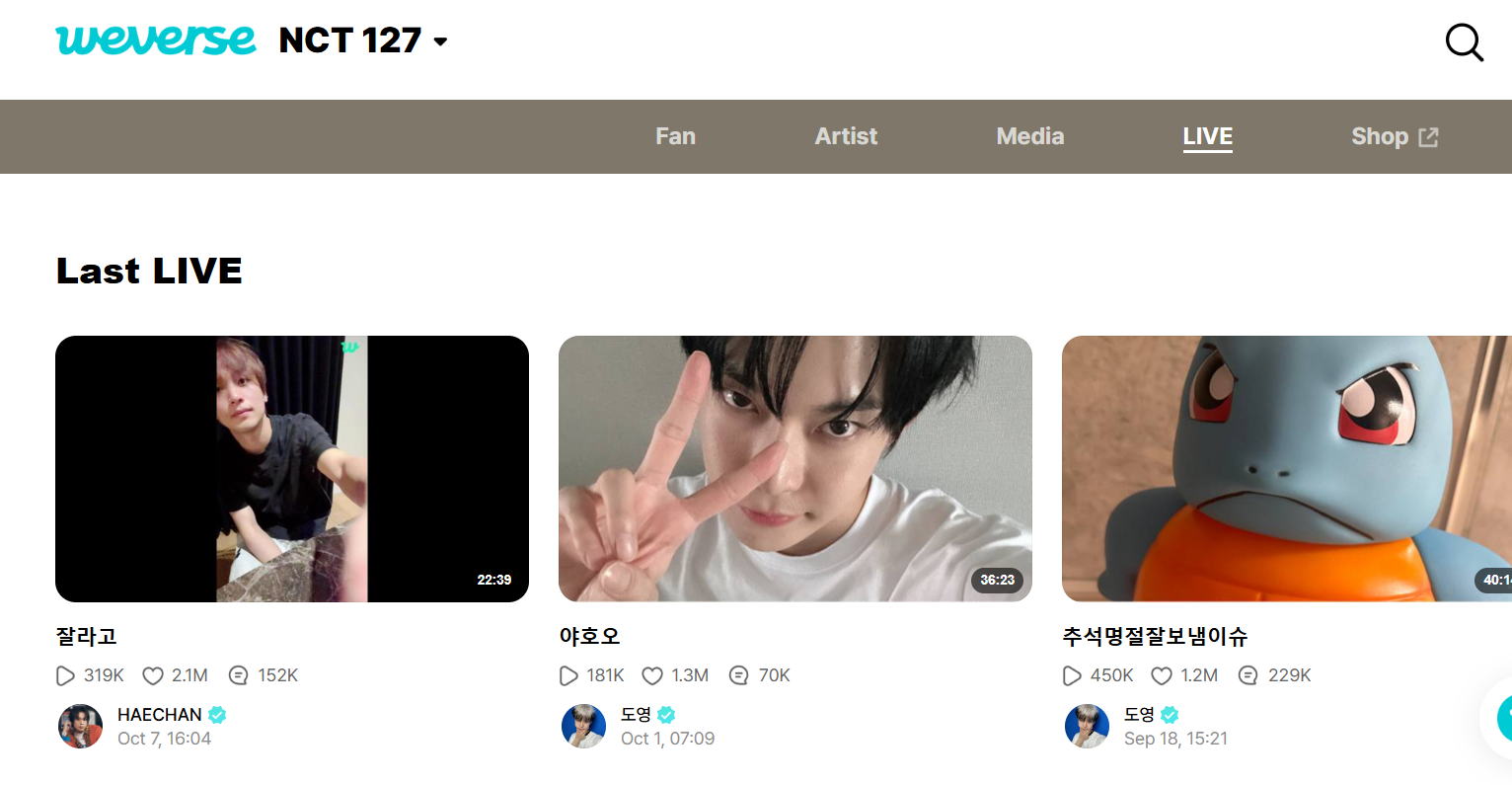
In week 9 of our weekly workshops we began to look at digital ethnography. We began this weeks task by reflecting on the previous week’s experiment with Sumpter’s Matrix and in small groups discussed the findings we had gathered over the week.
Following this experiment we began to look at Ethnographies of online ‘communities’ to examine what these spaces look like and how they operate. In pairs we chose a community we believed ourselves to be members of and described that community to the other person. We outlined the ways in which the communities are accessed online, how the community began and how its developed over time, as well as what the goals and values of the community might be as a whole.
Following the explanation to and from our partners, we then began to investigate each other’s community groups to see what we could figure out. We discussed what we had learned about the community from our investigation, as well as some of the things we had found confusing.
One of the main challenges of this week was exploring a brand new community site I had not explored before and trying to engage with the styles of language and posting that I’m not used to. However it was fascinating to engage in a side of culture that was completely new and taught me a lot about the ways in which different online groups engage and interact with both each other and the celebrities they are fans of.